Choosing reliable soda machines is not simply a matter of comparing prices. Global buyers must examine cooling performance, carbonation consistency, syrup compatibility, cleaning access, and after-sales support. A machine that performs well in a showroom may struggle in a busy restaurant, hotel, cinema, or outdoor event.
James Quincey, former chairman and CEO of The Coca-Cola Company, once said, “We are a total beverage company, not just a sparkling beverage company.” His observation reflects an important purchasing reality. Modern soda machines must support changing drink preferences, efficient dispensing, and flexible product programs. They should also fit local voltage requirements, water conditions, installation standards, and service networks.
This guide introduces China’s top 10 soda machines suppliers for global buyers. It considers manufacturing experience, product range, customization ability, quality control, certifications, export capability, and technical assistance. Some suppliers may offer excellent equipment but limited overseas support. Others may provide strong service while charging more. That difference matters.
Look closely.
The ranking should not be treated as an absolute judgment. Supplier information, product specifications, and service performance can change over time. Buyers should request current test reports, warranty terms, spare-parts details, and reference installations before placing an order. A lower quotation can become expensive when shipping delays, difficult maintenance, or inconsistent carbonation appear later. This review aims to provide a practical starting point, while recognizing that the best soda machines choice depends on operating volume, market conditions, budget, and long-term service expectations.
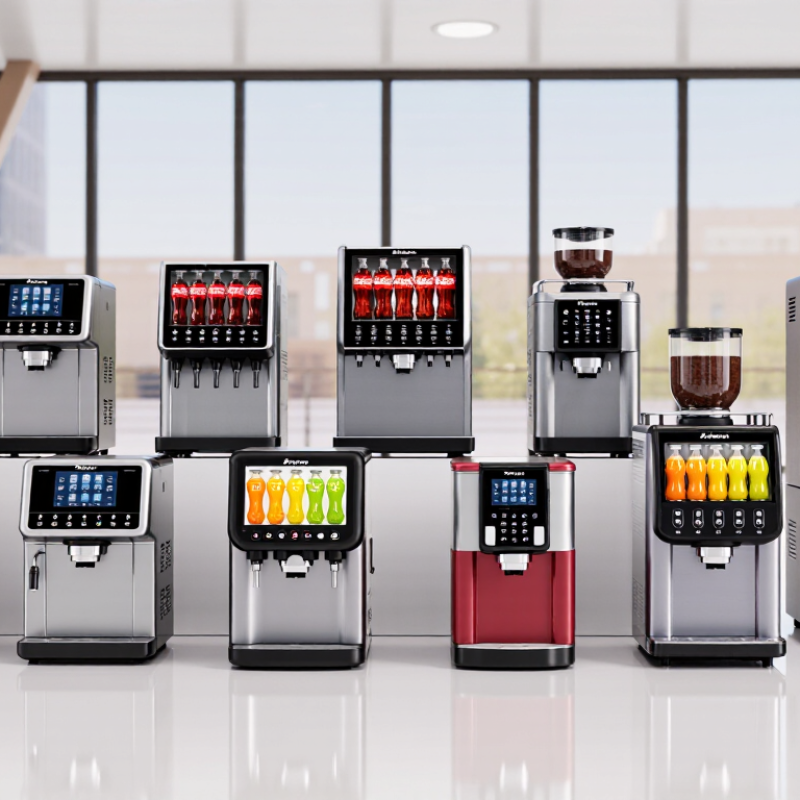
China’s soda machine industry has grown with demand from cafés, restaurants, convenience stores, and hospitality venues. Domestic suppliers commonly produce countertop dispensers, multi-flavor systems, and compact commercial units. Production clusters benefit from mature metalworking, refrigeration, pump, and electronic component networks. This shortens development cycles and supports flexible order quantities.
Export buyers usually compare carbonation stability, cooling speed, syrup compatibility, cleaning access, and power requirements. A reliable machine should deliver consistent bubbles during repeated service, not only during factory testing. Food-contact materials, electrical safety, and water-handling design require careful verification for each destination market. Certification documents should match the exact model and configuration. Samples matter more than attractive catalog images.
The market is not perfectly uniform. Some capacity claims are difficult to verify, and after-sales support can vary between suppliers. Buyers should inspect factory records, spare-part availability, warranty terms, and response procedures before signing a contract. A practical test can run the machine through several busy service cycles, checking temperature, pressure, noise, and dispensing accuracy. Small details reveal weaknesses. For example, a hard-to-remove nozzle may increase cleaning time and create maintenance risks. China remains a competitive sourcing base, but price alone can hide engineering compromises, inconsistent testing, or limited technical communication.
| Rank | Anonymous Supplier Profile | Primary Product Focus | Typical Capacity Range | Carbonation Technology | Common Applications | Export Configuration | Buyer Evaluation Point |
|---|---|---|---|---|---|---|---|
| 1 | Profile A — High-volume equipment supplier | Commercial soda fountains and post-mix dispensers | 4–12 valves; approximately 100–300 servings/hour, depending on configuration | CO₂ injection through chilled water and syrup mixing | Restaurants, cinemas, food courts, hotels | 220–240 V / 50 Hz and 110–120 V / 60 Hz options are commonly requested | Cooling performance, food-contact materials, spare-parts availability |
| 2 | Profile B — Compact retail dispenser supplier | Countertop soda dispensers and compact beverage systems | 1–4 valves; approximately 30–120 servings/hour | Direct carbonated-water supply or integrated carbonator | Convenience stores, cafés, small restaurants | Compact packaging for containerized or palletized shipment | Counter space, noise level, cleaning access and water inlet requirements |
| 3 | Profile C — Self-service kiosk supplier | Touchless and self-service soda kiosks | 4–8 beverage selections; output varies by cooling and dispensing setup | Post-mix dispensing with electronic portion control | Retail chains, campuses, entertainment venues | Touchscreen, contactless payment and language customization may be integrated | Software compatibility, sanitation design and remote monitoring |
| 4 | Profile D — Bag-in-box system supplier | Post-mix units designed for bag-in-box syrup | 2–10 syrup lines; serving rate depends on pump and cooling capacity | Carbonated water blended with concentrated syrup at dispensing point | Quick-service restaurants, catering, stadiums | Syrup connectors and fittings are commonly customized for local packaging formats | Ratio accuracy, pump compatibility and CO₂ pressure stability |
| 5 | Profile E — Bottle and can carbonator supplier | Carbonation units for packaged water and soft-drink production | Approximately 300–3,000 L/hour for small and medium installations | Inline carbonation using chilled water and CO₂ | Small beverage plants, contract packers, pilot production | Skid-mounted layouts and stainless-steel product-contact piping are common | Flow rate, dissolved CO₂ control, CIP compatibility and documentation |
| 6 | Profile F — Stainless-steel beverage equipment supplier | Custom soda dispensers, tanks and beverage modules | Project-specific; from countertop modules to integrated production skids | External or integrated carbonation modules | Hotels, central kitchens, beverage service operators | Made-to-order dimensions, piping layouts and control-panel languages | Material grade, weld quality, pressure rating and commissioning support |
| 7 | Profile G — Energy-efficient cooling supplier | Chilled beverage dispensers with optimized refrigeration | 2–8 valves; suitable for low-to-medium service volume | Carbonation combined with compressor-based or electronic cooling | Retail stores, cafés, offices and hospitality venues | Voltage, refrigerant and energy-label requirements vary by destination market | Power consumption, refrigerant compliance and ambient-temperature performance |
| 8 | Profile H — OEM and private-label supplier | OEM soda machines and customized dispensing cabinets | 1–12 valves, depending on cabinet and cooling configuration | Post-mix, pre-mix or hybrid dispensing options | Importers, distributors, foodservice equipment integrators | Logo-free or buyer-specified panels, manuals and packaging | Minimum order quantity, tooling fees, quality control and warranty terms |
| 9 | Profile I — Vending and automated dispensing supplier | Automated soda vending and portion-control equipment | Usually 4–12 selections; capacity depends on syrup, water and cup storage | Electronic dosing with carbonated-water generation or supply | Transport hubs, offices, schools and public venues | Payment modules, telemetry and local electrical approvals may be required | Uptime, cybersecurity, payment compatibility and service network |
| 10 | Profile J — Small-batch and laboratory equipment supplier | Compact carbonation and beverage-testing systems | Approximately 20–300 L/hour, depending on model | Batch or inline carbonation for controlled trials | R&D centers, beverage startups, cafés and pilot plants | Compact footprint, adjustable parameters and multilingual technical documents | Repeatability, pressure control, measurement accuracy and cleaning procedure |