10 Tips for Buying Snack Machines Wholesale Globally

Buying snack machines wholesale across global markets can reduce unit costs, but the cheapest quotation rarely tells the full story. A reliable purchase begins with clear product requirements, realistic sales assumptions, and careful supplier verification. Consider machine capacity, payment systems, cooling performance, energy use, and product compatibility. A compact machine may suit a hotel lobby, while a larger model may perform better in a busy transport hub. Ask for technical specifications, operating videos, sample invoices, and references from established buyers. These details reveal more than polished product photos.

International sourcing also requires practical planning. Confirm factory experience, production lead times, packaging standards, spare-parts availability, and warranty procedures before placing a deposit. Request a pre-shipment inspection, especially when ordering several snack machines. Check electrical ratings, plug types, language settings, and payment technology for the destination market. Import duties, safety certifications, labeling rules, and local installation requirements can change the final cost significantly. Requirements vary by country, and assumptions create expensive delays. A supplier may promise fast delivery, yet shipping schedules can shift during peak seasons. Build a reasonable buffer. It is not perfect, but it is safer.

This guide, “10 Tips for Buying Snack Machines Wholesale Globally,” focuses on decisions that protect both budget and long-term performance. It combines purchasing experience, equipment knowledge, and careful supplier evaluation. The goal is not simply to buy more machines. It is to choose dependable equipment that customers can use easily, operators can maintain efficiently, and businesses can support responsibly across different markets.
10 Tips for Buying Snack Machines Wholesale Globally

Define Machine Types, Capacity, and Demand Using NAMA’s $31B U.S. Vending Market

Buying snack machines wholesale globally starts with a clear definition of the machine type. Choose compact snack-only units, combination machines, or refrigerated models. Each serves a different setting. A small office may need a narrow machine with simple shelves. A transport hub may require stronger cooling, larger storage, and faster payment processing.

NAMA’s estimated $31 billion U.S. vending market shows the scale of consumer demand, but national totals can mislead. Your target location matters more. Track foot traffic, operating hours, nearby food options, and popular snack categories. A machine holding 40 selections may suit a quiet workplace. A high-traffic site may need 200 or more units of inventory. Measure real demand before choosing capacity.

My first demand forecast was too optimistic. People do not buy evenly throughout the day. Weather, wages, school schedules, and local tastes can change sales quickly. Leave space for refill access and service tools. Ask the wholesaler for energy data, warranty terms, replacement-part availability, and shipment protection. Confirm voltage, payment compatibility, labeling rules, and import requirements for each destination. Cheap equipment can become expensive when one missing part delays service for three weeks. Keep a small test order before committing to a full container.
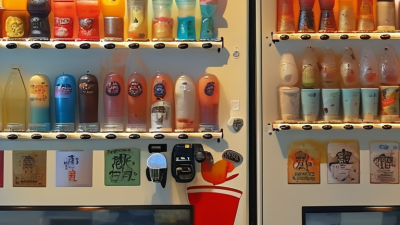
Compare Global Suppliers Across 5M European Vending Machines and Key Regions

Buying snack machines wholesale requires more than comparing catalog prices. Europe’s approximately 5 million vending machines create a useful benchmark for reliability, payment compatibility, and service access. Compare suppliers against European operating conditions, then check whether their machines suit North America, Asia-Pacific, the Middle East, Africa, or Latin America. Temperature, voltage, product sizes, and buying habits vary widely.

Tip: Request tested data, not promises. Ask for average uptime, cooling performance, energy use, and failure rates. Verify electrical certificates, food-contact materials, warranty terms, and spare-part availability. A low purchase price may become expensive when one control board takes eight weeks to arrive. Check minimum order quantities and packaging quality too. One damaged shipment can erase a small discount.

Tip: Run a small pilot before placing a container-sized order. Test payment systems, touchscreens, dispensing accuracy, and remote monitoring in a real location. Suppliers should explain customs documents, installation support, and technician training. Compare response times across regions, not only production capacity. A factory may build excellent machines yet provide weak after-sales support. That matters more than glossy specifications.

Keep a written comparison sheet. Record lead times, replacement-part prices, energy ratings, software language options, and return procedures. Ask for customer references in climates similar to yours. Some assumptions will be wrong. Review them after the pilot, especially if local snacks have unusual shapes or packaging. Reliable wholesale decisions come from measured performance, clear documentation, and practical service commitments.

10 Tips for Buying Snack Machines Wholesale Globally - Compare Global Suppliers Across 5M European Vending Machines and Key Regions

Region Market Scale Indicator Electrical Baseline Climate and Placement Considerations Payment Requirements Main Compliance Checks Wholesale Buying Tip
Europe Approximately 5 million vending machines across the wider European market; totals vary by country and machine definition. Generally 230 V and 50 Hz; plug and socket requirements vary between countries. Indoor locations are common. Outdoor installations require weather protection, temperature control, and anti-vandal construction. Cash, bank cards, contactless payments, and mobile wallets are widely used; local payment preferences still differ. CE-related product obligations where applicable, electrical safety, electromagnetic compatibility, food-contact rules, recycling obligations, and data protection for connected systems. Confirm destination-country documentation, language settings, tax configuration, spare parts, and service coverage before comparing unit prices.
North America Large, mature vending market concentrated in workplaces, schools, hospitals, transport locations, and hospitality sites. The United States and Canada commonly use approximately 120 V and 60 Hz; plug configurations are different from most of Europe. Machines may face cold northern winters, hot summers, or humid environments; refrigeration and insulation specifications should match the site. Card and contactless acceptance is important, while cash acceptance remains relevant in many locations. Electrical certification accepted by the destination market, accessibility requirements, food safety, radio approvals for wireless devices, and local tax rules. Request the correct voltage version, payment-terminal integration, accessibility features, and replacement-part availability for the specific country.
East Asia High-density urban markets with strong use of vending in transit areas, offices, residential buildings, and public facilities. Japan uses 100 V with regional 50 Hz or 60 Hz differences; mainland China generally uses 220 V and 50 Hz; other markets vary. Compact footprints, high transaction frequency, humidity resistance, and reliable cooling are important in dense urban sites. Cashless payments are highly significant, but the required payment method differs substantially by country and operator. Destination-market electrical approvals, wireless-device rules, cybersecurity controls, food safety, and local-language user interfaces. Check software localization, character display support, payment protocol compatibility, and remote monitoring before placing a bulk order.
Gulf Region Vending demand is concentrated in shopping centers, airports, hospitals, universities, offices, and other air-conditioned facilities. Many markets use approximately 220–240 V and 50 Hz; local plug and import requirements must be verified. High ambient heat, dust, and direct sunlight can reduce cooling performance; outdoor units need a suitable operating-temperature rating. Contactless cards and mobile payments are important, with cash still used depending on the site and customer base. Import documentation, electrical safety, wireless approvals, food labeling, local language requirements, and temperature performance. Prioritize compressor capacity, ventilation clearance, dust protection, and a documented maximum operating temperature.
Latin America Growing demand in offices, universities, hospitals, retail sites, transport locations, and residential developments. Voltage and frequency vary widely, including 127 V or 220 V and 50 Hz or 60 Hz depending on the country. Humidity, dust, voltage fluctuation, and uneven site infrastructure can affect reliability and refrigeration performance. Cash and card payments are both relevant; QR and mobile-payment adoption depends on the country and operator. Country-specific electrical approvals, import duties, food labeling, tax settings, wireless certification, and consumer protection rules. Verify voltage tolerance, surge protection, local payment support, customs classification, and the availability of local technicians.

Wholesale Supplier Comparison Checklist

Buying Tip What to Compare Evidence to Request Why It Matters
1. Define the product mix Snack-only, refrigerated, frozen, mixed-product, or modular configuration. Product dimensions, shelf layout, temperature range, and capacity sheet. The wrong cabinet configuration can reduce sales capacity and increase operating costs.
2. Match voltage and frequency Rated voltage, frequency, plug type, power draw, and voltage tolerance. Electrical specification label, test report, and destination-market configuration. Incorrect electrical configuration can create safety, warranty, and import problems.
3. Check payment compatibility Cash, card, contactless, QR, mobile wallet, offline mode, and settlement options. Payment integration list, network requirements, transaction fees, and update policy. Payment limitations directly affect customer conversion and machine uptime.
4. Verify capacity and dimensions Number of selections, product-size range, machine footprint, weight, and door clearance. Dimension drawing, loading diagram, and packed shipping dimensions. Transport routes, elevators, doorways, and installation spaces may limit usable models.
5. Compare energy performance Rated power, standby consumption, refrigeration load, lighting, and operating temperature. Energy test data under a stated ambient temperature and duty cycle. Electricity is a recurring cost and can materially change the total cost of ownership.
6. Review compliance documentation Electrical safety, electromagnetic compatibility, wireless equipment, food contact, and recycling obligations. Declarations, test reports, manuals, labels, and country-specific import documents. Compliance gaps can delay customs clearance or prevent lawful operation.
7. Evaluate food safety features Temperature monitoring, cleanability, food-contact materials, expiration controls, and alerts. Cleaning instructions, temperature logs, material declarations, and alarm functions. Poor temperature control or hygiene design increases product-loss and regulatory risk.
8. Calculate landed cost Unit price, tooling, packaging, freight, insurance, duties, taxes, installation, and spare parts. A written quotation using the same Incoterm, currency, quantity, and delivery destination. A lower factory price may become more expensive after logistics and compliance costs.
9. Confirm serviceability Warranty length, response time, remote diagnostics, spare-part stock, and technician training. Warranty terms, parts list, fault-code guide, and service escalation process. Downtime reduces revenue and can be more costly than a higher initial purchase price.
10. Test before scaling Dispensing accuracy, payment success, cooling stability, connectivity, accessibility, and vandal resistance. Pre-shipment inspection report, sample-machine trial, acceptance criteria, and defect remedy terms. A pilot order exposes technical and operational issues before a large wholesale commitment.

Note: Regional voltage, frequency, payment, import, tax, and compliance requirements can differ by country. Confirm the current rules with the destination-market authorities and the installation-site operator before ordering.

Verify Certifications, Payment Systems, and Electrical Standards Before Ordering

When buying snack machines wholesale, certification checks should happen before price negotiations. Ask for current safety certificates, laboratory reports, and product serial numbers. Confirm that the documents match the exact machine model and production version. A certificate for an older model may not protect your shipment. I also request photographs of labels, wiring compartments, and rating plates. Small details often expose large documentation gaps.

Payment systems need equal attention. Confirm whether the machine accepts coins, notes, cards, mobile payments, or several methods. Ask how transactions are encrypted and how customer data is protected. Payment hardware should support the rules in your target market. Request a live demonstration, not only a written promise. Test refunds, failed payments, offline transactions, and receipt printing. I once overlooked a language setting, which caused confusing customer messages. That mistake was preventable.

Electrical standards can quietly create expensive delays. Check voltage, frequency, plug design, grounding, fuse ratings, and power consumption. Compare the supplier’s specifications with your local electrical requirements. Ask for relevant testing evidence from a recognized laboratory. A compatible adapter is not always a complete safety solution. Inspect the sample machine with a qualified technician before ordering a container. Keep every certificate, invoice, inspection image, and approval email in one file. My process is not perfect, but written records make errors easier to find and correct.

10 Tips for Buying Snack Machines Wholesale Globally

This chart ranks the ten most important pre-order checks on a practical 1–10 planning scale. Always confirm destination-country requirements for electrical voltage and frequency, safety certification, payment-system compatibility, import documentation, warranty coverage, and after-sales service before placing a wholesale order. Priority scores are a buyer-planning framework, not market statistics.

Calculate MOQ, Shipping, Tariffs, and Total Landed Cost for Wholesale Purchases

Buying snack machines wholesale starts with a spreadsheet, not a catalogue. Define machine dimensions, voltage, payment interface, cooling system, and destination country. Ask three suppliers for carton size, net weight, packing photos, test reports, spare-parts lists, and production lead time. Confirm the minimum order quantity (MOQ) in writing. A low unit price can hide a high MOQ. For example, 20 machines at $1,150 equals $23,000 before logistics. Negotiate a mixed container only if serial tracking remains clear. Keep it practical.

Calculate landed cost per working machine. Use this formula: unit price, tooling, inland pickup, export fees, ocean or air freight, insurance, destination handling, duties, taxes, inspection, storage, and delivery. Divide by expected sellable units, not ordered units. Include two damaged units in a stress test. The World Bank’s Logistics Performance Index 2023 compares customs, infrastructure, and shipment reliability across economies. Use it to question optimistic transit promises. UNCTAD reports that maritime shipping carries over 80% of world merchandise trade by volume. Port delays can materially change your budget. Get a freight quote valid for a stated period. Rates move.

Estimate tariffs from the correct HS classification and the importing country’s official tariff schedule. Do not copy a supplier’s guess. Check whether electrical components, refrigeration units, or payment modules change classification. Add customs broker fees and destination VAT or sales tax, where applicable. Compare FOB, CIF, and DDP carefully; each shifts risk and cost differently. Request a landed-cost quote with named assumptions. The International Trade Centre’s Market Access Map supports tariff research, but local customs advice remains essential. My imperfect rule is simple: keep a 10–15% contingency, then test exchange-rate swings and one missed delivery window. Recalculate before signing.

Assess Warranty, Spare Parts, and ROI Against the 7.9% Market CAGR Forecast

Buying snack machines wholesale across borders requires more than comparing unit prices. The 7.9% market CAGR forecast suggests expanding demand, but growth does not guarantee profit. I have seen low-cost machines lose money when payment faults, cooling failures, or delivery delays stopped sales for weeks. Treat the forecast as context, not proof.

Examine the warranty line by line. Confirm coverage length, labor terms, shipping responsibility, and response times. A 12-month warranty may sound adequate, yet overseas repairs can take longer than expected. Ask whether common spare parts are stocked near your target market. Motors, control boards, locks, sensors, and refrigeration components should have clear part numbers. Request repair manuals and wiring diagrams before payment.

Calculate ROI using realistic daily sales, electricity costs, card-processing fees, rent, customs charges, and maintenance. A machine selling 25 snacks daily may perform differently in an office, hospital, or transport hub. Use conservative prices and include three months of working capital. Then test a small shipment before ordering hundreds. My own estimates have sometimes looked too optimistic. That is worth admitting. Seasonal demand, product spoilage, and local voltage differences can quickly change the result. A dependable supplier should provide test records, compliance documents, installation guidance, and measurable after-sales support. Reliable evidence matters more than a polished sales presentation.