Contact Us: 416.615.1555 | sale@booksvendingmachine.com
Choosing the right drink vending machine supplier requires more than comparing product prices. Operators need dependable equipment, responsive service, and clear evidence of performance. A machine may look modern in a showroom, yet fail in a busy station without strong cooling and payment systems.
This guide examines leading suppliers worldwide through practical criteria. These include machine durability, energy efficiency, product capacity, remote monitoring, and maintenance support. It also considers touchscreen usability, cashless payments, temperature control, and accessibility for different users. Reliable suppliers should provide documented specifications, transparent warranties, installation guidance, and replacement parts.
Local conditions matter.
A supplier experienced in office buildings may not suit airports, universities, hospitals, or outdoor locations. Climate, foot traffic, security requirements, and available electricity can change the best choice. Regional certifications and responsible payment processing also deserve careful review. They are not minor details.
Supplier reputation should be checked through customer feedback, service records, and realistic operating data. Claims about sales growth or return on investment can be difficult to compare. Some figures exclude restocking, software subscriptions, transportation, or repair costs. That weakness deserves attention.
The strongest companies usually combine reliable hardware with useful after-sales support. However, no supplier is perfect in every market. A low-cost drink vending machine may reduce initial spending but create higher maintenance demands later. A premium model may offer better monitoring while requiring more complex integration.
This overview aims to provide a balanced starting point. It does not treat global rankings as permanent. Supplier quality changes, and buyer needs differ. Careful evaluation remains essential before signing a contract.
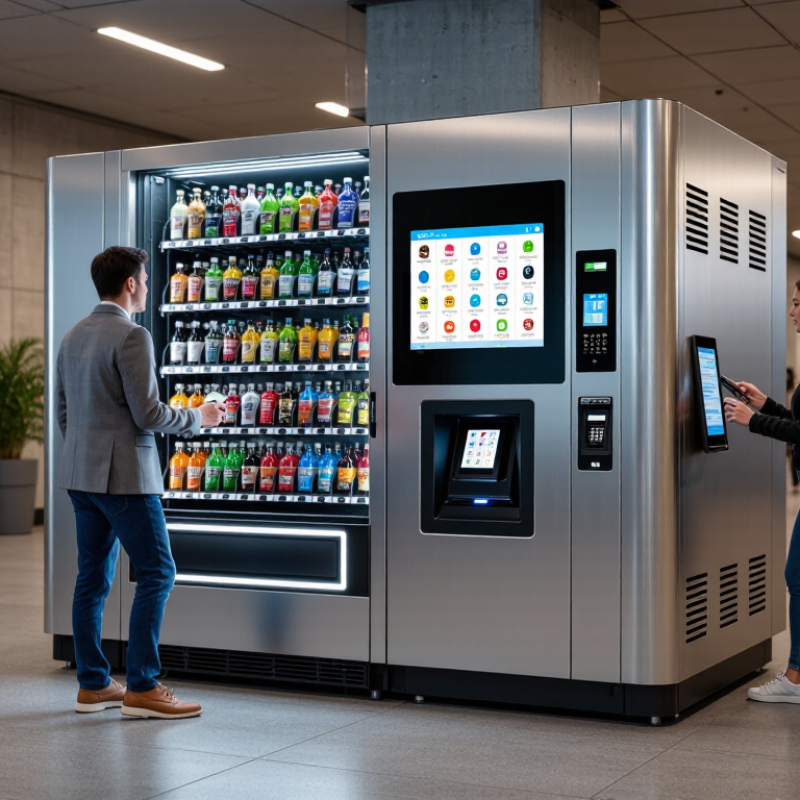
A leading drink vending machine supplier offers more than attractive cabinets and a broad product list. It understands how machines perform in real locations, including offices, hospitals, transport hubs, and outdoor sites.
Experience matters here. A reliable supplier can explain cooling recovery after repeated door openings, energy use during overnight operation, and performance in humid conditions. These details reveal practical knowledge.
Machine quality should be supported by documented testing and appropriate safety certifications for each market. Suppliers should provide clear specifications for temperature control, payment security, accessibility, and electrical protection. Strong technical teams also help operators select suitable capacities, bottle sizes, and dispensing layouts. Small details matter. A poorly positioned delivery tray can frustrate users every day.
Service reliability often separates a capable supplier from a leading one. Look for remote monitoring, spare-parts availability, technician response times, and transparent warranty terms.
Real performance data is useful, but it needs honest context. A supplier may report high uptime while excluding installation delays or temporary stock shortages. That deserves closer review.
I would ask for references from comparable sites and inspect a machine after heavy daily use. Even experienced suppliers make mistakes, especially when local climate, foot traffic, or payment habits change. Their willingness to discuss failures, corrective actions, and maintenance limits is a strong sign of professional credibility. Clear training materials and traceable support records make daily operation less dependent on guesswork.
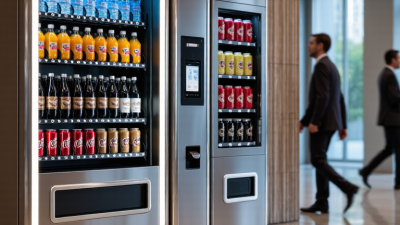
Global drink vending suppliers now serve offices, hospitals, transit stations, universities, and convenience sites. Their strongest offerings combine refrigerated storage, cashless payment, remote monitoring, and flexible product layouts. Grand View Research estimates the global vending machine market reached about USD 21.2 billion in 2023. It also projects a 10.7% compound annual growth rate from 2024 to 2030. These figures suggest strong demand, but drink-focused performance varies by region.
Regional suppliers often outperform global manufacturers because they understand local temperatures, payment habits, and bottle sizes. North American operators typically prioritize high-capacity machines and route efficiency. European suppliers commonly emphasize energy reduction and contactless payments. Asian markets often require compact units for dense urban locations. NAMA’s 2022 U.S. census estimated vending sales at approximately USD 26.3 billion, supported by about 2.3 million machines. The report also shows how important site selection remains.
The best supplier is rarely the largest one. It is the company that can maintain compressors, refill products quickly, and provide dependable technical support. Service matters more. Operators should examine uptime records, spare-part access, warranty terms, and software compatibility before signing contracts. A machine may look modern yet perform poorly beside a warm entrance. That detail is easy to miss. Industry rankings can also mislead because reports use different market definitions. I would compare verified regional references, energy data, and five-year operating costs instead of relying on headline market share.
Global Vending Machine Market Revenue Outlook, 2023–2030
The chart presents the global vending machine market as a company-neutral indicator of demand available to drink vending machine suppliers. The 2023 market value is based on published industry research, while later values are calculated using the reported 10.7% compound annual growth rate. Values are shown in billions of U.S. dollars.
Source: Grand View Research, Global Vending Machine Market Report.
Leading drink vending machine suppliers now offer more than chilled beverage cabinets. Their product ranges often include compact countertop units, high-capacity floor models, and outdoor machines with reinforced panels. Many systems support cans, bottles, cartons, and freshly mixed drinks. Product flexibility matters when a location serves office workers, travelers, or students.
Technology has become the main differentiator. Touchscreen interfaces can display product images, nutrition details, and prices clearly. Cashless payment modules accept cards, mobile wallets, and contactless transactions. Remote monitoring helps operators track stock levels, temperature, sales, and technical faults from a central dashboard. Energy-saving compressors, LED lighting, and insulated doors can reduce daily power use. Some advanced machines also use telemetry to predict refill needs, although prediction accuracy depends on reliable data.
In practical installations, hygiene and maintenance deserve equal attention. Automatic cleaning cycles support safer beverage dispensing, while removable nozzles simplify routine servicing. Refrigeration alarms are useful in busy locations. Still, no system is perfect. Weak network coverage can interrupt payment updates, and complex software may frustrate staff. Suppliers with documented testing, responsive technical support, clear warranties, and available replacement parts are usually safer choices. Buyers should request operating data from similar sites, not rely only on impressive demonstrations.
Comparing drink vending machine suppliers starts with the machine’s daily environment. A busy station needs fast cooling, strong locks, clear displays, and simple restocking access. Ask for measured recovery time after repeated sales, not just a maximum capacity figure. Request service records from similar locations. This evidence is more useful than polished product photos. Check whether the supplier tests temperature stability, payment security, and drainage performance under real operating conditions.
A reliable supplier should provide transparent pricing, warranty terms, spare-part availability, and technician response targets. Read the warranty carefully. Some coverage excludes screens, compressors, or damage caused by unstable power. Confirm installation requirements, delivery duties, software updates, and remote monitoring fees before signing. For cashless payments, verify encryption practices and data-handling responsibilities with the supplier. Ask for references, but do not accept vague testimonials as proof. A short pilot in one location can reveal refill frequency, user errors, and actual energy use.
Total cost matters more than the purchase price. Estimate electricity, maintenance, payment fees, product loss, and transport over three years. Suppliers should explain their sales assumptions, although these forecasts are rarely perfect. I would inspect the service dashboard myself; confusing alerts can delay a basic repair. That detail is easy to overlook. Compare response quality, documentation, and honesty when a requested feature is unavailable. A supplier willing to discuss limitations may prove more dependable than one promising everything.
Choosing a worldwide drink vending machine supplier requires more than comparing catalog prices. Start with proven experience in markets similar to yours. A supplier should explain how its machines perform in heat, humidity, dust, and heavy daily use. Ask for installation records, maintenance data, and customer references from different regions.
Technical support can determine whether a profitable machine keeps operating. Check response times, remote monitoring, spare-parts availability, and technician coverage near your locations. The supplier should provide clear warranty terms, service-level agreements, and training for restocking staff. Payment systems must support local currencies and approved transaction methods. Electrical safety, accessibility, labeling, and food-safety requirements also need documented compliance.
Total cost deserves careful attention. Include shipping, customs handling, software fees, energy use, repairs, and payment processing charges. A cheap machine may become expensive after one difficult repair. Request a pilot installation before ordering at scale. Measure sales by hour, product waste, downtime, and customer complaints. No checklist is perfect. Local demand can change quickly, and attractive forecasts may prove too optimistic. A reliable supplier will discuss those risks openly, share test results, and adjust the proposal instead of promising effortless returns. Small details matter, such as door seals, cooling recovery time, and whether replacement parts arrive within days or weeks.
| Evaluation Dimension | Why It Matters Worldwide | Recommended Verification Point | Relevant Data or Standard | Priority |
|---|---|---|---|---|
| International Market Coverage | A supplier with established export procedures can reduce customs, documentation, and delivery risks. | Request references for at least three destination regions and review export documentation samples. | Check HS classification, country-of-origin documents, import requirements, and regional electrical approvals. | High |
| Machine Capacity and Product Mix | Drink capacity determines refill frequency, footprint, and revenue potential in each location. | Compare can, bottle, and mixed-product configurations under the same footprint and power conditions. | Verify selections, product dimensions, storage capacity, dispensing speed, and temperature range. | High |
| Cooling Performance | Hot climates, outdoor installations, and high-traffic locations place greater demand on the refrigeration system. | Ask for tested operating conditions, pull-down time, temperature stability, and high-ambient performance. | Review rated ambient temperature, beverage temperature range, compressor specifications, and refrigerant type. | High |
| Energy Efficiency | Electricity is a major operating cost, especially for refrigerated machines running continuously. | Compare measured daily energy consumption rather than relying only on theoretical compressor ratings. | Request kWh per day under defined ambient temperature, load, standby, and lighting conditions. | High |
| Payment Compatibility | Customers in different markets may expect coins, banknotes, contactless cards, mobile wallets, or local payment methods. | Confirm payment hardware, software interfaces, settlement capability, and local acquirer compatibility. | Check EMV payment requirements, PCI-related responsibilities, MDB or equivalent vending interfaces, and currency support. | High |
| Remote Monitoring and Telemetry | Remote status information can reduce unnecessary site visits and identify stock, temperature, or payment faults. | Test alerts, inventory reporting, sales data, connectivity recovery, user permissions, and data export. | Verify cellular, Wi-Fi, or Ethernet options; data ownership; API availability; and offline operation. | High |
| Electrical and Safety Compliance | Electrical requirements, safety rules, and certification procedures differ by destination market. | Obtain declarations, test reports, wiring diagrams, and certificates applicable to the installation country. | Common references include IEC 60335-2-75, CE requirements in the European Economic Area, and local North American safety approvals. | High |
| Accessibility and User Interface | Accessible controls and clear instructions improve usability and may be required in public or regulated locations. | Review screen height, reach range, button placement, payment accessibility, audio guidance, and language options. | Check applicable local accessibility rules, including requirements derived from ADA in the United States. | Medium |
| Build Quality and Vandal Resistance | Outdoor and unattended machines face impact, moisture, dust, tampering, and temperature variation. | Inspect cabinet construction, locks, glass or panel protection, drainage, anchoring, and corrosion resistance. | Review enclosure rating where relevant, anti-corrosion treatment, impact resistance, and installation instructions. | High |
| Service Network and Spare Parts | Downtime directly affects sales, so local technical support and parts availability are essential. | Confirm response times, technician coverage, spare-parts locations, repair procedures, and discontinued-part policy. | Request service-level targets, warranty terms, recommended spare-parts lists, and preventive-maintenance schedules. | High |
| Customization and Localization | Different markets may require local languages, currencies, voltage, product dimensions, graphics, and payment methods. | Separate standard features from chargeable modifications and confirm minimum order quantities. | Verify voltage and frequency, language files, currency handling, interface configuration, and artwork approval process. | Medium |
| Lead Time and Production Capacity | Long or uncertain lead times can delay site launches and create inventory planning problems. | Request production schedules for samples, pilot orders, repeat orders, and customized configurations. | Compare quoted manufacturing lead time, shipping time, order quantity, and agreed delivery terms. | High |
| Total Cost of Ownership | The purchase price alone does not show the cost of electricity, maintenance, payment fees, logistics, and downtime. | Build a five-year model covering acquisition, installation, energy, repairs, consumables, software, and payment charges. | Compare total cost per machine, expected uptime, warranty coverage, energy consumption, and replacement-part prices. | High |
| Environmental Performance | Lower energy use and responsible refrigerant selection can reduce operating costs and environmental impact. | Ask for refrigerant data, energy test conditions, recyclable material information, and end-of-life guidance. | Review refrigerant global-warming-potential information, local refrigerant rules, standby consumption, and material declarations. | Medium |
| Quality Management and Reliability | Consistent manufacturing processes help reduce defects across large international orders. | Review factory quality procedures, inspection records, failure analysis, and pilot-production results. | ISO 9001 certification may support process evaluation, but it should not replace product testing or customer references. | High |
| Contract and Warranty Protection | Clear commercial terms protect buyers from unexpected repair, delivery, software, and replacement costs. | Compare warranty duration, exclusions, logistics responsibility, acceptance criteria, and software-service fees. | Confirm Incoterms, payment milestones, spare-parts warranty, response obligations, and dispute-resolution jurisdiction. | High |