Contact Us: 416.615.1555 | sale@booksvendingmachine.com
Choosing a food and drink vending machine in 2026 is not just a matter of comparing prices. The right unit must fit its location, products, users, and service routine. A machine beside a busy hospital entrance may need fast payment, clear labels, and frequent restocking. A smaller office unit may work better with fewer selections and simpler maintenance. Small details matter.
Vending researcher Michael Kasavana is associated with a useful industry maxim: “Vending is retailing without a salesperson.” That idea makes the buying decision more practical. Shoppers cannot ask a machine for help, so product visibility, straightforward controls, and dependable payment options shape the experience. Consider refrigerated capacity, energy use, remote inventory alerts, cleaning access, warranty terms, and local technician support. Ask suppliers for real service response times, not just impressive feature lists. Then compare those claims with references from operators using similar machines.
This guide explores how to assess machine types, capacity, payment systems, and ongoing costs. It also considers placement, product mix, accessibility, and after-sales support. A spreadsheet helps, but it cannot tell you whether a touchscreen feels confusing during a rushed lunch break. I would not assume the newest model is always best. The honest answer depends on the site, and sometimes the first estimate misses a daily operating detail. Look closely before choosing.
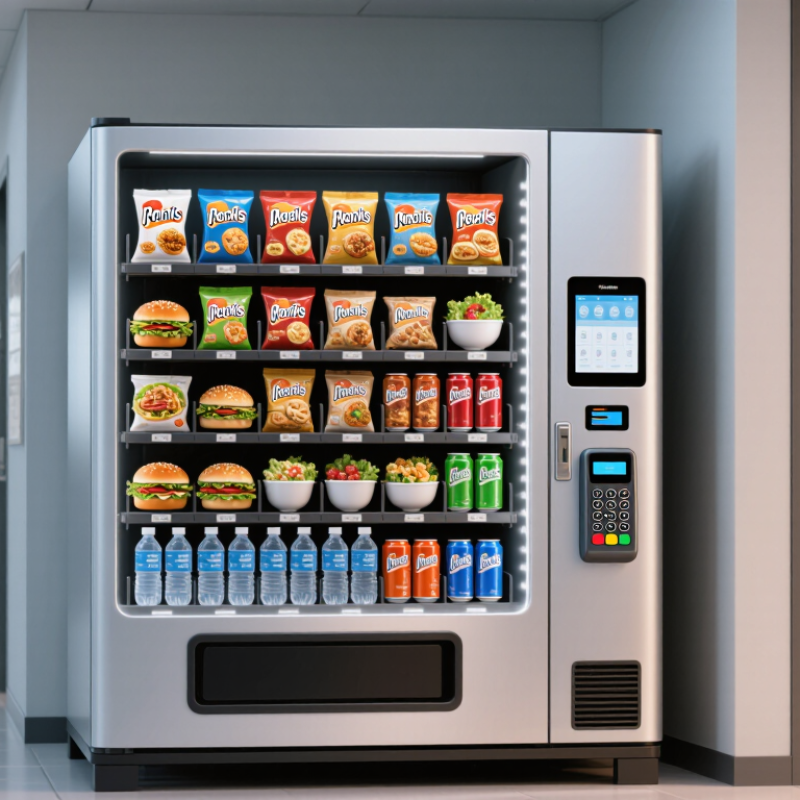
A machine should fit its setting before it fits a sales forecast. Record foot traffic by hour, not just by day. A hospital lobby at 2 a.m. needs reliable meals and drinks; a school corridor may need compact options during short breaks. Check power access, delivery routes, cleaning space, and whether doors stay locked overnight. Small details matter. NAMA’s 2024 State of the Industry report estimates that U.S. convenience services generated $26.6 billion in 2023. That figure covers vending and other services, so it signals a substantial sector—not guaranteed sales at any one site.
Then study the people who will actually use the machine. Note their schedules, likely spending range, and whether they need quick breakfasts, cold drinks, or filling snacks. Ask a few regular visitors, and compare their answers with observed purchases. Counts can mislead. Cantaloupe’s 2024 Micropayment Trends Report found that average cashless vending purchases were $2.24, compared with $1.78 for cash purchases. Treat that difference as a useful planning clue, not a promise; your location may behave differently. Choose products that match available refrigeration, shelf life, and restocking frequency. A varied menu sounds attractive, but slow-moving items can expire. I would start with a focused selection, review sales and waste weekly, then adjust.
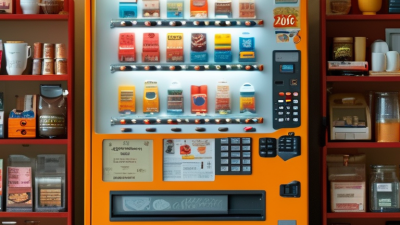
Start with your location, customers, and product requirements. For temperature-sensitive products, confirm that the machine can maintain the required storage conditions.
Frozen food should be kept at 0°F or below, while the FDA Food Code sets a 41°F maximum for cold-holding temperature-controlled foods. Choose equipment suited to the products you plan to sell, and check applicable local requirements. Sources: FoodSafety.gov and FDA Food Code.
A snack machine suits packaged items that can remain at room temperature, such as crisps, biscuits, and bottled water. A refrigerated model is better for sandwiches, dairy drinks, and other chilled products, but it needs reliable temperature monitoring and regular cleaning. Combo machines offer both categories in one cabinet. Convenient, but each section may hold fewer items.
Match capacity to actual demand, not the largest number listed on a specification sheet. A machine near a busy entrance may need more drink slots than one in a small staff room. Check product dimensions, too: tall bottles and wide meal trays can leave awkward gaps in standard shelves. Measure twice. Track sales for several weeks if possible, then adjust the product mix. Early estimates are often wrong.
Compare features that affect daily use. Cashless payment can speed up queues, while remote stock alerts help staff plan refills. Refrigerated units should display clear temperature readings and allow easy access for maintenance. Look for adjustable shelves, bright product labels, and a delivery mechanism suited to fragile items. An elevator-style delivery system may reduce drops, but adds complexity. Ask how cleaning, restocking, and fault reporting work in practice; a feature list alone cannot show whether routine tasks will be simple.
A reliable food and drink vending machine should accept contactless cards, mobile wallets, and, where customers need it, cash. The 2024 Micropayment Trends Report found that cashless payments made up 71% of vending transactions in 2023, up from 67% in 2022. That shift matters, but it does not mean every location can drop cash. Check that the payment terminal supports secure processing and ask the provider for current PCI DSS compliance documentation. Test a small purchase before opening: a declined tap at a busy lunch break quickly frustrates customers.
Connectivity affects both sales and food quality. Remote monitoring can flag low stock, payment failures, or a refrigerator that is warming beyond its set range. Ask how the machine behaves when Wi-Fi or cellular service drops, and whether transactions can safely resume afterward. Small details matter. For food safety, inspect temperature alarms, cleaning access, and service records in person. Request documentation for relevant equipment standards, such as NSF/ANSI 25 for vending machines and UL 751 for electrical safety, where applicable. A certificate is useful, but it cannot replace regular checks. I would still verify the actual temperature display; sensors can drift, and a neat dashboard may hide a real problem.
| Decision Area | What to Check | Useful Standard or Benchmark | Questions to Ask Before Buying |
|---|---|---|---|
| Payment options | Confirm support for the payment methods your customers use, such as cash, contactless cards, chip cards, and mobile wallets. Check whether prices and payment instructions are easy to read. | For card payments, ask how the payment system protects account data and whether its configuration is covered by the applicable PCI DSS requirements. Contactless acceptance depends on compatible, properly configured hardware and payment services. | Which payment methods work? Are transaction, service, or connectivity fees charged? Who handles payment support and updates? |
| Payment security | Look for secure payment processing, controlled access to service panels, and a documented process for software and security updates. Avoid storing payment-card data in the machine unless there is a clear, compliant reason. | PCI DSS applies to entities and systems that store, process, or transmit payment-card data. The applicable requirements depend on the payment setup; a vendor’s claim alone does not establish compliance. | Can the supplier provide current documentation for the payment solution, update responsibilities, and incident support? |
| Connectivity | Check whether the machine supports wired Ethernet, Wi-Fi, or cellular service, and whether it can report sales, inventory, faults, and temperature alerts remotely. | Network coverage and carrier technology vary by location. Confirm that the modem and service will remain supported in the installation area, and ask how the machine behaves during an outage. | Is connectivity included or subscription-based? Can the machine store transactions or sales records offline? How are network credentials and remote access secured? |
| Food temperature control | For machines selling temperature-controlled food, check the refrigeration or heating system, temperature display, alarms, and records. Verify that the machine is suitable for the specific products being sold. | The FDA Food Code is a model code; local authorities determine applicable requirements. Its 2022 edition uses 41°F (5°C) or below for cold holding and 135°F (57°C) or above for hot holding, subject to applicable provisions and local adoption. | Can temperature settings be monitored and documented? What happens after a temperature excursion or power failure? Which local food-safety rules apply? |
| Sanitation and food-contact materials | Inspect product-contact surfaces, dispensing areas, seals, and removable parts. Check whether routine cleaning can be done without specialized tools and whether the machine prevents contamination during dispensing. | NSF/ANSI 25 covers food and beverage vending machines. NSF/ANSI 51 addresses materials used in commercial food equipment. Ask whether the specific model has relevant certification; requirements depend on the product and jurisdiction. | Which parts require daily or periodic cleaning? Are cleaning instructions and food-contact documentation available? |
| Electrical and mechanical safety | Check the electrical rating, grounding, installation instructions, guarding of moving parts, and protection against access to hazardous components during normal use and servicing. | UL 751 is a safety standard for vending machines. Confirm the exact model’s certification or listing with the supplier and check applicable local electrical and building requirements. | Can the supplier provide certification details for the exact model? Who is responsible for installation, inspection, and repairs? |
| Accessibility and usability | Review the reach and operation of payment controls, selection buttons, and product access. Check screen readability, instructions, and whether the machine can be used from the intended approach. | In the United States, the 2010 ADA Standards address operable parts and accessible reach ranges, with requirements that depend on the approach and any obstruction. Other countries and local rules may differ. | Has the installation layout been checked against applicable accessibility rules? Can a customer complete a purchase without assistance? |
| Capacity and product fit | Compare shelf or tray configuration, package dimensions, loading access, product visibility, and the ability to handle the expected mix of drinks and foods. | Capacity depends on package size, machine configuration, and product arrangement; published capacity figures should be verified against the products you plan to stock. | Can the machine vend each intended package reliably? Are shelves adjustable, and how quickly can products be restocked? |
| Service and total cost | Compare purchase or lease cost with installation, payment processing, connectivity, energy use, maintenance, parts, and warranty coverage. | Operating costs vary by location, usage, utility rates, payment provider, and service plan. Request written terms rather than relying on a single headline price. | What is included in the warranty? What are expected service response times, recurring fees, and parts availability? |
A vending machine’s purchase price is only the opening figure. Compare delivered cost, installation, payment hardware, and initial stock, then spread the equipment cost across its expected service life. For operating costs, estimate refrigeration, lighting, payment processing, restocking travel, and spoilage. The U.S. Energy Information Administration reported an average commercial electricity price of about 12.8 cents per kilowatt-hour in 2024. At that rate, a machine using 2 kWh daily costs roughly $93 a year for electricity, before local fees. Small costs accumulate.
Energy use varies with room temperature, door openings, and machine settings. ENERGY STAR says certified vending machines are, on average, 40% more energy-efficient than standard models; check the model’s actual energy data before projecting savings. For maintenance, request written prices for routine cleaning, refrigeration checks, parts, and service calls. Keep a repair log: repeated compressor faults can change the economics faster than a modest purchase discount. A spreadsheet can still lie if its assumptions are optimistic.
Build a monthly cost per sale from those figures, and test slow-sales scenarios too. For example, fewer transactions spread fixed costs across fewer drinks and snacks. Include payment fees and unsold inventory, then compare the result with realistic selling prices. Use local utility rates and supplier quotes, not national averages, for a final decision. Estimates are imperfect; meter readings and service records will make the next review better.
A food and drink vending machine is only as dependable as the supplier behind it. Ask how they assess your location, expected sales, product mix, and power access before recommending a model. A supplier who asks about daily foot traffic and peak hours is more useful than one who simply quotes a machine. Ask for written details on warranty coverage, response times, replacement parts, and remote monitoring. Ask for evidence. A sample service schedule can reveal what routine maintenance actually involves. Check whether staff training is included, and who handles faults after installation. Small details matter.
Installation should be planned around the real site, not a generic checklist. Confirm the machine’s measurements, delivery route, doorway clearance, floor strength, and electrical requirements before ordering. Discuss ventilation, customer access, and how deliveries will reach the machine without blocking a busy corridor. Get a written timeline that identifies site preparation, delivery, setup, testing, and handover. That matters. Ask who removes packaging and verifies temperature settings, payment systems, and product dispensing. Make sure someone on your team learns basic cleaning and restocking procedures. It is easy to focus on purchase price and underestimate support. I would still compare quotes carefully, but a low price is less persuasive when service terms are vague or installation responsibilities are unclear.